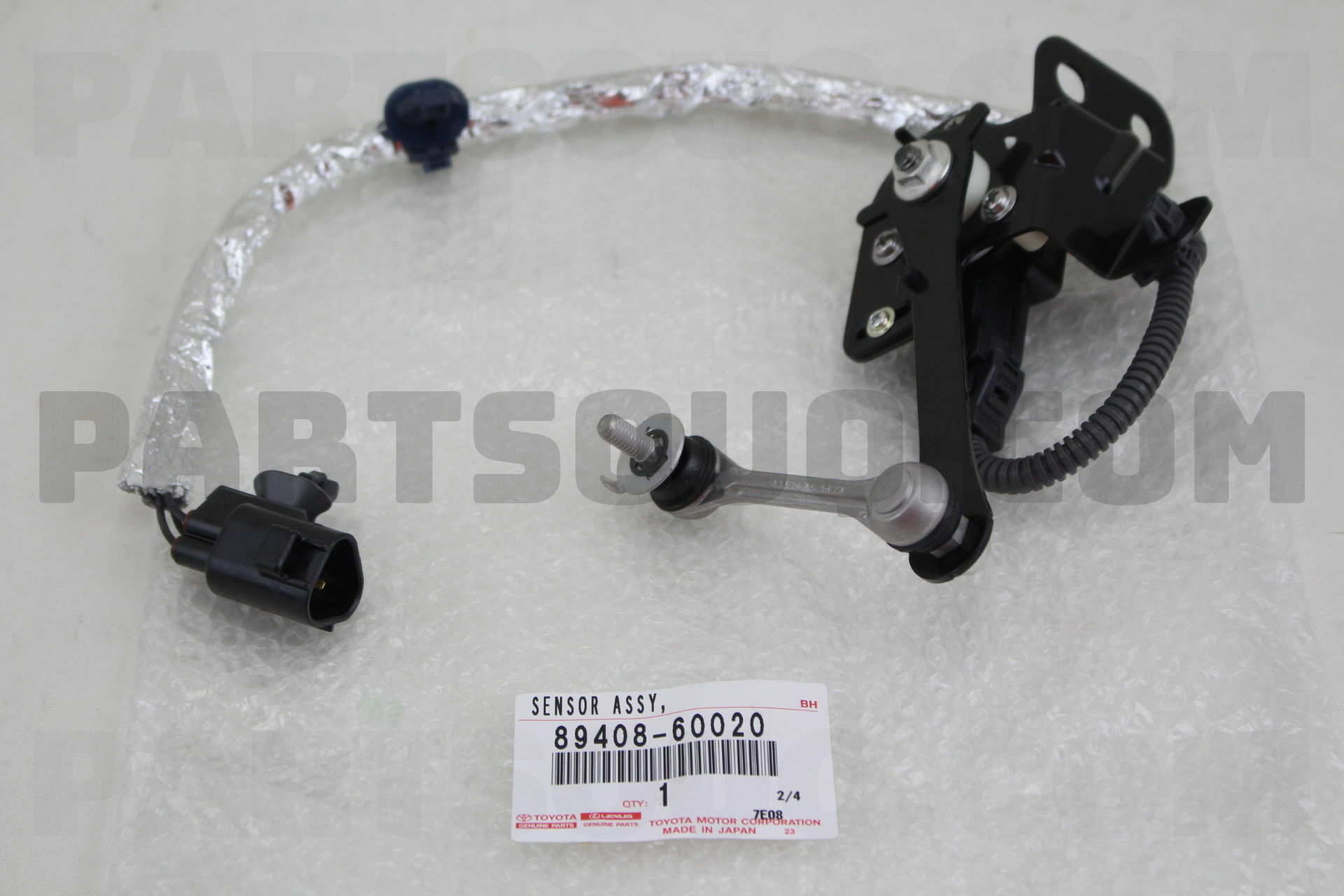
8940860020 Toyota SENSOR SUB-ASSY, HEIGHT CONTROL, REAR LH, Price: 208.16$, Weight: 0.522kg


| Make | Number | Name | Availability | Weight, kg | Ship in, Days | Price |
|---|---|---|---|---|---|---|
Toyota |
8940860020 |
SENSOR SUB-ASSY, HEIGHT CONTROL, REAR LH |
0 |
0.522 |
7-10 |
208.16$ |
| Not Available | ||||||
Originals
Compatibility
| Description | Model | Options | Prod Period | Diagram |
|---|---|---|---|---|
| UZJ200,URJ202,VDJ200 | VDJ200R-GNTEZW | Seating Capacity: 8-SEATER; Driver's Position: RIGHT-HAND DRIVE VEHICLES; Grade: VX TYPE; Engine: (1VDFTV) 4500CC DIESEL TURBO | 09.2007 - ... | View |
Rear Height Control Sensor
In the realm of modern vehicle stability and comfort, the Rear Height Control Sensor is pivotal. 🚗 This component ensures that your vehicle maintains the ideal ride height, essential for optimal driving dynamics and passenger comfort. The sensor continuously monitors and adjusts the suspension system, responding to changes in load and road conditions, thus providing a smoother ride and better handling.
Importance of the Sensor
The primary role of this sensor is to maintain the equilibrium between the vehicle chassis and its body. This ensures that the car maintains the right height regardless of passenger load or cargo. In turn, this contributes to improved fuel efficiency and reduced tire and suspension wear.
Functionality
Operating through electronic signals, the sensor communicates with the vehicle’s onboard computer system to adjust the suspension. This creates a harmonized balance, offering a stable journey even on uneven terrains. The seamless integration of this sensor means every transition from acceleration to braking is handled with finesse, ensuring safety and comfort.
Risks of a Faulty Sensor
Should the Rear Height Control Sensor fail, the vehicle may experience uneven ride height, leading to potential imbalance. This could result in excessive tire wear, reduced braking efficiency, and an uncomfortable ride. Furthermore, the failure to maintain proper clearance can impact the vehicle's ability to handle different driving conditions, posing a safety risk.
Compatible Models
- Land Cruiser