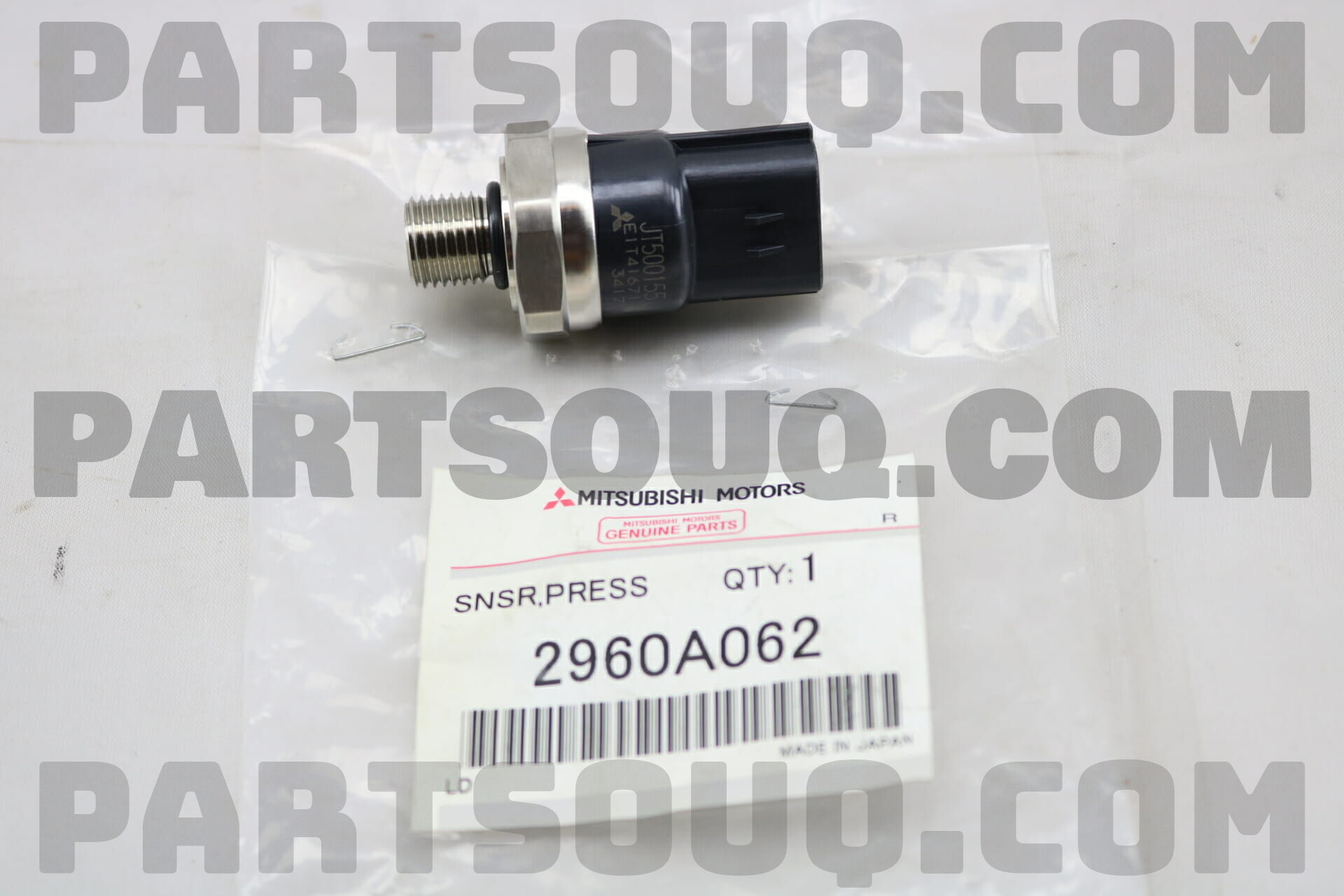
2960A062 Mitsubishi SENSOR,A/T OIL PRESSURE, Price: 198.97$, Weight: 0.05kg
| Make | Number | Name | Availability | Weight, kg | Ship in, Days | Price |
|---|---|---|---|---|---|---|
Mitsubishi |
2960A062 |
SENSOR,A/T OIL PRESSURE |
0 |
0.05 |
15-20 |
198.97$ |
| Not Available | ||||||
Originals
| Make | Number | Name | Availability | Weight, kg | Processing, days | Price | |
|---|---|---|---|---|---|---|---|
| Mitsubishi |
SENSOR,A/T OIL PRESSURE
|
0 |
0.058
|
-
|
198.97$
|
Not Available |
Substitutions
| Make | Number | Name | Availability | Weight, kg | Processing, days | Price | |
|---|---|---|---|---|---|---|---|
| Mitsubishi |
MR483948
|
SENSOR,A/TOILPRESSURE
|
0 |
0.058
|
-
|
159.09$
|
Not Available |
| Mitsubishi |
MR483948
|
SENSOR,A/TOILPRESSURE
|
0 |
0.058
|
-
|
159.09$
|
Not Available |
Compatibility
| Frame | Market | Model | Model Year From | Model Year To | Modification | Plant | Diagram |
|---|---|---|---|---|---|---|---|
| Z20# | Australia | Z27A | 06.2004 | 09.2011 | 1500/2WD(4G15) | MMAL | View |
| Frame | Market | Model | Model Year From | Model Year To | Modification | Diagram |
|---|---|---|---|---|---|---|
| Z20# | Japan | Z28A | 10.2002 | 06.2012 | 1500/4WD(4G15) | View |
| Frame | Market | Model | Model Year From | Model Year To | Modification | Diagram |
|---|---|---|---|---|---|---|
| CR# | General (EXPORT) | CR6W | 05.2000 | 12.2005 | 2000 | View |
| Frame | Market | Model | Model Year From | Model Year To | Modification | Diagram |
|---|---|---|---|---|---|---|
| CS,CT# | General (EXPORT) | CS5A | 09.2000 | 08.2013 | 1800(SEDAN) | View |
| Frame | Market | Model | Model Year From | Model Year To | Modification | Diagram |
|---|---|---|---|---|---|---|
| CS,CT# | Japan | CS2A | 03.2000 | 08.2009 | 1500(SEDAN) - MX-S 4WD(GDI),CVT | View |
Essential Transmission Oil Pressure Sensor
The transmission oil pressure sensor plays a critical role in ensuring the smooth operation of your vehicle's automatic transmission system. Its main job is to monitor the hydraulic pressure levels in the transmission. Maintaining accurate pressure readings is crucial because the pressure directly influences gear shifting, responsiveness, and overall transmission health. Without it, you might experience erratic gear shifts or even transmission failure, which can lead to costly repairs.
Understanding Its Functionality
This sensor is typically mounted on the transmission system and communicates with the vehicle's electronic control unit (ECU). As it monitors the fluid pressure, it sends real-time data to the ECU, which then adjusts the pressure as needed to ensure optimal transmission performance. This continuous monitoring and adjustment process is essential for the seamless operation of the vehicle.
Consequences of a Faulty Sensor
If the sensor malfunctions or fails, it can lead to a variety of transmission issues. Drivers may notice delayed or harsh shifting, reduced fuel efficiency, and even the illumination of the 'check engine' light. Ignoring these symptoms can result in significant wear and tear on the transmission system, eventually leading to more serious and expensive damage.
✔️ Model Compatibility
- Dion
- Lancer
- Colt
- Colt/Colt Plus
- Lancer
- Lancer Cedia