Aktualisiert für 2026: Moderne Autos kombinieren kompakte Turbomotoren, sauberere Emissionen und intelligentere Elektronik. Eines hat sich jedoch nicht geändert: Eine präzise mechanische Steuerung ist für einen Verbrennungsmotor überlebenswichtig. Die Zahnriemen-Umlenkrolle – eine schlicht wirkende Riemenscheibe – sorgt dafür, dass der Riemen sauber in der Spur läuft. Fällt sie aus, kann sich die Steuerzeit verstellen oder der Riemen reißen, was schwere Motorschäden verursachen kann.
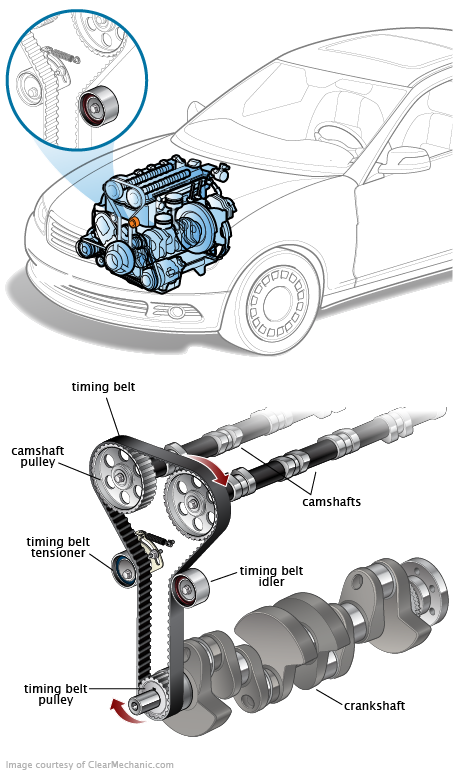
Von frühen Motoren bis 2026: Eine kurze Geschichte 🚗
Frühe Automobile nutzten Ketten und Zahnräder zur Steuerung der Nockenwelle. In den 1960er- bis 1980er-Jahren setzten viele Hersteller auf Zahnriemen, weil sie leiser liefen und leichter zu warten waren. In den 2000er- und 2010er-Jahren kehrten manche Modelle zu Ketten zurück, während andere Zahnriemen mit längerer Lebensdauer weiterentwickelten. In den 2020er-Jahren führten Hersteller bei ausgewählten Motoren „Belt-in-Oil“-Systeme (BIO) ein, um Reibung zu reduzieren. Unabhängig von der Bauart bleiben Umlenkrollen unverzichtbar, um den Riemenlauf zu führen und zu stabilisieren.
Wichtige Merkmale moderner Motoren (2026) ⚙️
- Hohe Verdichtung + Turboaufladung: engere Toleranzen, höhere Belastung der Steuertriebkomponenten.
- Variable Ventilsteuerung (VVT): ist auf stabile Riemenspannung und präzise Nockenwellensteuerzeiten angewiesen.
- Hybrid-Start-Stopp: häufige Neustarts = mehr Lastzyklen bei niedriger Drehzahl für die Lager.
- Belt-in-Oil-Bauweisen: spezielle Materialien, empfindlich gegenüber Ölqualität und Verunreinigungen.
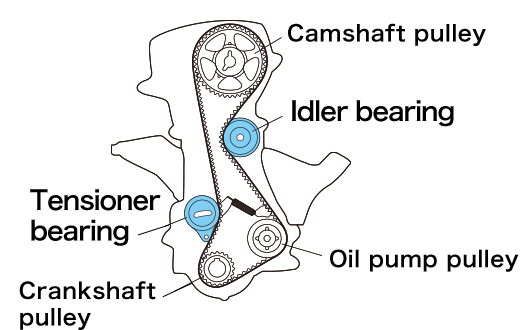
Was ist eine Zahnriemen-Umlenkrolle? 🧩
Die Zahnriemen-Umlenkrolle ist eine frei drehende Riemenscheibe mit abgedichtetem Lager. Sie erzeugt keine Spannung – das ist Aufgabe des Spanners –, sondern führt den Zahnriemen und hält seinen Laufweg ausgerichtet. Eine verschlissene Umlenkrolle kann den Riemen schief laufen lassen, Geräusche verursachen und – wenn sie festgeht – einen katastrophalen Riemenausfall auslösen.
Warum die Umlenkrolle wichtig ist (Freiläufer vs. Interferenzmotor) ❗
Bei Interferenzmotoren nutzen Ventile und Kolben denselben Raum zu unterschiedlichen Zeitpunkten. Geht die Steuerzeit verloren, können Ventile verbiegen und der Motor muss unter Umständen überholt werden. Auch bei Freiläufermotoren kann eine defekte Umlenkrolle das Fahrzeug lahmlegen und andere Bauteile beschädigen.
Häufige Symptome einer defekten Zahnriemen-Umlenkrolle (2026) 🔍
- 🗣️ Zirpen, Quietschen oder hohes Jaulen aus dem Bereich der Zahnriemenabdeckung, stärker beim Kaltstart, verändert sich mit der Drehzahl.
- 🐻 Knurrende oder rumpelnde Lagergeräusche, die mit der Motordrehzahl zunehmen.
- 🧵 Riemenverschleiß: ausgefranste Kanten, Gummiabrieb, verglaste Oberfläche oder zerrissene Fasern unter der Abdeckung.
- 🔥 Heißer Geruch oder Geruch nach verbranntem Gummi nahe der Steuerseite des Motors.
- ⚖️ Riemen läuft außermittig: glänzende Riefen auf der Umlenkrolle oder ungleichmäßiger Riemenverschleiß.
- 💡 Motorkontrollleuchte, Zündaussetzer, unrunder Leerlauf – die Steuerzeit kann um einen Zahn verstellt sein.
- 🎯 VVT-Fehler (Nockenwellen-/Kurbelwellen-Korrelationscodes) und schwache Leistung im unteren Drehzahlbereich.
- 🛑 Plötzliches Absterben oder kein Start: festgefressene Umlenkrolle, übersprungene Steuerzeit oder gerissener Riemen (schwerwiegend).
Frühwarnzeichen vs. Notfallanzeichen ⏱️
- 🟡 Früh: leises Zirpen/Jaulen, gelegentlicher Gummigeruch, leichter Riemenabrieb.
- 🔴 Notfall: lautes Rumpeln/Schleifen, Motor geht aus, startet nicht, Metallspäne, fehlende Riemenzähne.
Hauptursachen für den Ausfall der Umlenkrolle 🧪
- Alter/Laufleistung: ausgetrocknetes Fett, Lagerverschleiß.
- Wärmezyklen: Alterung der Lagerdichtungen.
- Verunreinigung durch Öl/Kühlmittel: undichte Dichtungen oder eine Wasserpumpe, die Fett auswäscht.
- Überspannung oder Fehlausrichtung: unsachgemäßer Einbau schädigt das Lager.
- Minderwertige Teile: billige Lager, schwache PartSouqBot, [20.02.2026 14:40] Laufbahnen.
- Belt-in-Oil-Motoren: falsche Ölspezifikation kann Schlamm bilden und den Verschleiß beschleunigen.
So diagnostizieren Sie das Problem zu Hause 🧰
- Kalt und warm hören: achten Sie auf Tonhöhenänderungen mit der Drehzahl; ein Quietschen, das in Rumpeln übergeht, deutet oft auf ein versagendes Lager hin.
- Sichtprüfung: suchen Sie nach Riemenstaub, Fasern oder geschmolzenem Kunststoff in oder um die Zahnriemenabdeckung.
- Stethoskop-Test: verwenden Sie vorsichtig ein Mechaniker-Stethoskop an der Abdeckung; lokalisiertes Jaulen/Knurren spricht für Riemenscheibe oder Lager.
- Diagnosegerät: lesen Sie Codes zur Nockenwellen-/Kurbelwellen-Korrelation aus (z. B. P0016–P0019) oder zu Zündaussetzern.
- Keine Riemensprays: Sprays überdecken Geräusche nur; sie reparieren keine Umlenkrolle.
Schritte der professionellen Diagnose 🧪🔎
- Abdeckungen entfernen, um den Riemenlauf zu prüfen und die Umlenkrolle von Hand zu drehen (auf Rauigkeit/Spiel achten).
- Zustand des Spanners und Ausrichtung prüfen; ein defekter Spanner kann einen Umlenkrollendefekt vortäuschen.
- Wasserpumpe (falls riemengetrieben) auf Undichtigkeiten/Spiel prüfen.
- Steuermarkierungen und Nockenwellen-/Kurbelwellen-Korrelation mit Oszilloskop oder OEM-Werkzeugen verifizieren.
- Nach Öl-/Kühlmittellecks an Nockenwellen-/Kurbelwellendichtungen und an der Ablaufbohrung der Pumpe suchen.
So beheben Sie es richtig 🛠️
Ersetzen Sie den kompletten Zahnriemensatz, nicht nur das laute Bauteil. Das verhindert doppelte Arbeitskosten und sorgt für zuverlässige Steuerzeiten.
Als Satz ersetzen ✅
- Zahnriemen
- Umlenkrolle(n) und Spanner
- Wasserpumpe (falls vom Zahnriemen angetrieben)
- Neue Dichtungen (Nockenwelle/Kurbelwelle), falls undicht
- Frisches Kühlmittel und Befestigungsteile (Schrauben, Unterlegscheiben) nach OEM-Vorgabe
Best Practices für den Einbau 📐
- Steuermarkierungen exakt ausrichten; verlassen Sie sich nicht nur auf Farbmarkierungen – nutzen Sie OEM-Referenzen.
- Befestigungselemente mit vorgeschriebenem Drehmoment anziehen; Riemen gemäß Werkstatthandbuch vorspannen/spannen.
- Motor von Hand zwei volle Umdrehungen durchdrehen und Markierungen sowie Spannung erneut prüfen.
- Alle Riemenscheiben reinigen; Öl/Kühlmittel vom neuen Riemen fernhalten.
Kontrollen nach der Reparatur ✔️
- Fehlercodes löschen; bei Bedarf VVT-Neuanlernen durchführen.
- Kalt- und Warmstarts auf Geräusche überwachen.
- Nach einigen Wärmezyklen erneut auf Undichtigkeiten prüfen.
Vorbeugung und Wartungsintervalle (2026) 🗓️
- OEM-Intervall für den Zahnriemen einhalten (häufig 60.000–105.000 Meilen / 90.000–168.000 km oder 5–7 Jahre).
- Qualitätsteile verwenden (OEM oder namhafte Marken).
- Schwitzen/Lecks früh beheben; Verunreinigungen zerstören Lager.
- Bei Belt-in-Oil: immer die richtige Ölspezifikation verwenden und rechtzeitig wechseln.
Kostenübersicht (2026) 💵
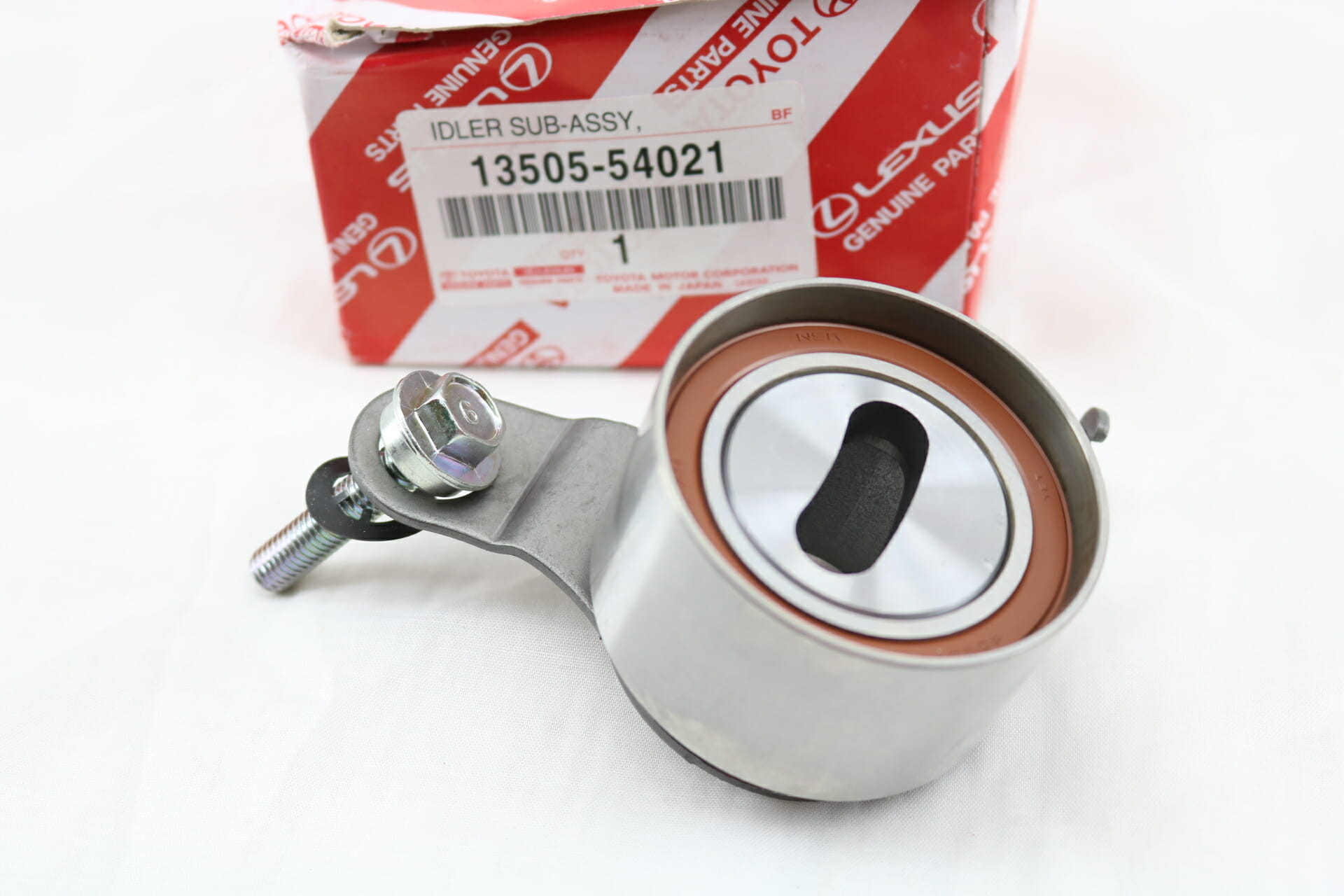
- Teile (Satz): 150–500+ $ je nach Motor.
- Arbeitszeit: 3–8 Stunden (der Zugang variiert stark).
- Typische Gesamtkosten: 450–1.500+ $. Schäden an Interferenzmotoren können 2.500–6.000 $ übersteigen.
Besondere Hinweise für Hybride und BIO-Systeme 🔋🛢️
- Hybride: häufige Motorneustarts erhöhen die Zyklenzahl; zeitbasierte Intervalle auch bei geringer Laufleistung einhalten.
- Belt-in-Oil: Die Ölqualität beeinflusst direkt die Lebensdauer von Riemen und Umlenkrolle; nur vom Hersteller freigegebenes Öl verwenden.
Defekte Zahnriemen-Umlenkrolle vs. defekter Spanner vs. Nebenaggregat-Umlenkrolle 🧭
- Zahnriemen-Umlenkrolle: Geräusche unter der Zahnriemenabdeckung, beeinflusst die Nockenwellensteuerung; Ausfall ist hochriskant.
- Zahnriemenspanner: erzeugt Spannung; Ausfall führt zu Spiel, überspringendem Riemen und lauteren Schlaggeräuschen.
- Nebenaggregat-Umlenkrolle (Keilrippenriemen): außenliegend; Geräusch ändert sich mit A/C-/Generatorlast; weniger katastrophal, aber dennoch wichtig. PartSouqBot, [20.02.2026 14:40]
Fazit ✅
Wenn Sie ein Jaulen, Zirpen oder Rumpeln aus dem Steuertriebbereich hören – oder Riemenverschleiß sehen –, handeln Sie sofort. Den Zahnriemensatz vor dem Ausfall zu ersetzen, ist deutlich günstiger als verbogene Ventile zu reparieren oder einen Motor zu überholen.

FAQ ❓
Kann ich mit einer defekten Zahnriemen-Umlenkrolle fahren? 🚫
Das ist riskant. Eine festgefressene Umlenkrolle kann den Riemen reißen lassen und einen Interferenzmotor zerstören. Lassen Sie das Auto abschleppen, wenn das Geräusch laut oder dauerhaft ist.
Was sind die häufigsten Symptome? 👂
Zirpen/Jaulen aus der Zahnriemenabdeckung, rumpelnde Lagergeräusche, Gummigeruch, ausgefranste Riemenkanten, Zündaussetzer und Nockenwellen-/Kurbelwellen-Korrelationscodes.
Worin unterscheidet sich das von einer defekten Keilrippenriemen-Umlenkrolle? 🔄
Die Keilrippenriemen-Umlenkrolle liegt außen und beeinflusst Nebenaggregate (A/C, Generator). Die Zahnriemen-Umlenkrolle sitzt unter der Abdeckung und beeinflusst die Motorsteuerung – ein Ausfall ist gefährlicher.
Sollte ich die Wasserpumpe ebenfalls ersetzen? 💧
Wenn sie vom Zahnriemen angetrieben wird, ja. Das ist kosteneffizient, wenn ohnehin alles demontiert ist, und vermeidet spätere doppelte Arbeitskosten.
Kann ich nur die laute Umlenkrolle ersetzen? 🧩
Nicht empfohlen. Ersetzen Sie für Zuverlässigkeit und Gewährleistung den kompletten Zahnriemensatz (Riemen, Umlenkrollen, Spanner und zugehörige Teile).
Welche Codes deuten auf Steuertrieb-/Umlenkrollenprobleme hin? 💻
P0016–P0019 (Nockenwellen-/Kurbelwellen-Korrelation), Zündaussetzer-Codes (P0300–P030X) und manchmal VVT-Leistungsfehlercodes.
Wie oft sollten Steuertriebkomponenten gewartet werden? ⏳
Halten Sie das Werksintervall ein – oft 60.000–105.000 Meilen (90.000–168.000 km) oder 5–7 Jahre. Hybrid- und BIO-Motoren können auch bei geringer Laufleistung zeitkritisch sein.
Welche Werkzeuge werden benötigt? 🧰
Werkstatthandbuch, Arretierwerkzeuge (wie vorgeschrieben), Drehmomentschlüssel, Abzieher, Kühlmittel und ein hochwertiger Zahnriemensatz.
Ist das eine DIY-Arbeit? 🛠️
Nur wenn Sie mit Steuerzeiten sicher umgehen können. Schon ein Zahn Versatz kann schlechten Motorlauf oder Motorschäden verursachen. Viele Fahrzeughalter entscheiden sich für eine Fachwerkstatt.
Was, wenn das Geräusch nur beim Kaltstart auftritt? 🥶
Kaltes Fett wird zäher und die Toleranzen sind eng, daher machen grenzwertige Lager im kalten Zustand Geräusche. Das ist trotzdem ein Warnsignal – ignorieren Sie es nicht.